Your shopping cart is empty!



"The Recognized Technical Experts in Our Field"
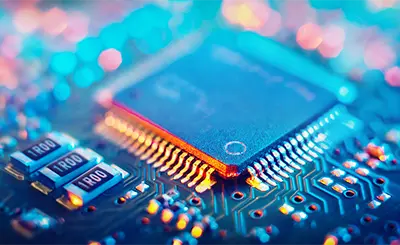
Microchips, also known as integrated circuits or ICs, are tiny, self-contained electronic devices consisting of millions to billions of miniaturized transistors, resistors, and capacitors etched onto semiconductor material, usually silicon. They make everything from smartphones and computers, to household appliances like washing machines and refrigerators, possible. Cutting-edge microprocessors, memory chips, and microcontrollers are driving advances in Artificial Intelligence (AI), robotics, and data processing, allowing for increasingly complex computing tasks.
But for all of the powerful technologies unlocked by integrated circuits, they have a vulnerability which necessitates careful handling to keep them viable. Microchips and other surface-mount devices (SMDs) are sensitive to moisture primarily because their polymer-based encapsulation materials (such as epoxy molding compounds) are hygroscopic and can absorb water from the atmosphere. Even relatively low levels of ambient humidity, when exposure time exceeds specified limits, can lead to moisture absorption in SMDs that may result in catastrophic failure.
The primary danger to be avoided is moisture-induced damage from affected SMDs during the high heat solder reflow process wherein SMDs are affixed to printed circuit boards (PCBs). When an SMD has absorbed moisture from the air, the rapid temperature spike (up to 260°C) causes that trapped water to instantly turn into superheated steam, which causes the package to crack or burst. This is commonly known as the “Popcorn Effect.” Related hazards include internal delamination, bond wire damage, and solderability issues.
These issues are preventable thanks to the industry standards set forth by JEDEC, a consortium of semiconductor and microelectronics manufacturers, in conjunction with IPC. Specifically, IPC/JEDEC J-STD-020 classifies surface-mount devices by Moisture Sensitivity Level (MSL) and IPC/JEDEC J-STD-033 clarifies the materials and procedures required for proper handling, packing, shipping, and use of moisture-sensitive SMDs.
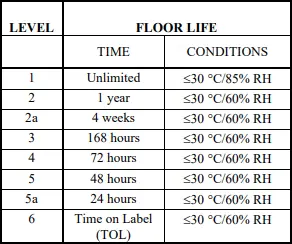
The level of packaging and handling rigor depends on the Moisture Sensitivity Level (MSL) assigned to each type of component per J-STD-020.
Most semiconductor products are rated MSL 3 or higher.
Flexible packaging for moisture-sensitive devices (MSDs) must meet specific technical requirements detailed in IPC/JEDEC J-STD-033 to ensure a minimum shelf life of 12 months.
Desiccants are placed inside the MBB to absorb residual moisture and any moisture that permeates the bag over time.
Every dry-pack must include a Humidity Indicator Card to alert the end user if the internal environment has been compromised.
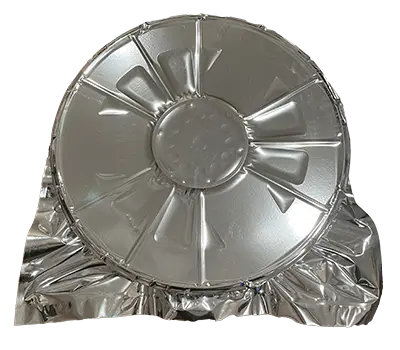
Reel of SMDs on a strip, vacuum sealed in MBB
IMPAK produces both MIL-SPEC materials and films that have even stronger moisture barrier properties than those called out in the JEDEC standards. We are also one of the most experienced purveyors of high-performance desiccants and other sorbents. Contact us to discuss how we can provide a sorbent system solution for challenging microelectronics applications.