Your shopping cart is empty!



"The Recognized Technical Experts in Our Field"
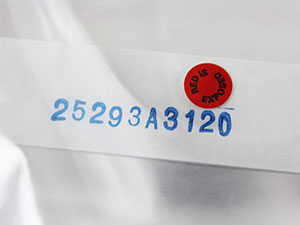
Sterilized products should always have an indicator, in the form of a sticker or slip of paper, that confirms that the product has undergone sterilization. But because different methods of sterilization are used for various products, and because one company’s indicators may function differently from another’s, close attention must be paid to avoid confusion about what these indicators mean.
One of the most important concepts to keep in mind is that sterilization indicators are intended to prove that a product has successfully undergone a sterilization process. The wording on an individual indicator, usually combined with a colored dot, will say one of the following:
The reason why most indicators do not flatly claim that a product is sterile is because sterility cannot be 100% guaranteed without performing testing to specifically measure the presence of microorganisms on the product. Although sterilized products are typically double bagged to prevent post-sterilization contamination, there is always a possibility that the product’s sterility will have been compromised in some way. Nonetheless, it is understood that if a product bears an indicator that positively confirms that it underwent sterilization, and if its protective packaging remains intact, the product is assumed to be sterile.
Here are the kinds of indicators you should expect to see for products that have undergone one of these sterilization processes:
Irradiation
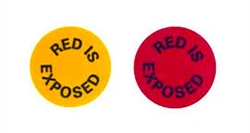
For both Gamma and E-Beam sterilization, indicators are generally yellow when placed on the product and turn red when irradiated (exposed to radiation).
Ethylene Oxide

For Ethylene Oxide (ETO or EO) sterilization, indicators are generally red when placed on the product and turn green when processed (exposed to ethylene oxide).
Steam / Autoclave

For autoclaving or steam sterilization, indicators can be yellow, pink, or light blue when placed on the product and turn dark brown or black when processed.
How are IMPAK's sterilized products processed?
Not every sterilization process is appropriate for every application. Individual stainless steel surgical instruments, for example, are usually sterilized via autoclaving, but instruments that are sensitive to heat or moisture would be damaged by this process. More complex devices, or those made of plastics, including pacemakers, catheters, and ventilators, are usually sterilized with ethylene oxide. ETO, however, does not permeate all materials and takes a long time to "off gas" - more with some materials than others.
The industry standard for sterilizing cases that contain hundreds of plastic pouches is to use gamma radiation. This method has proven to be the most reliable and efficient because the radiation permeates through all of the product without damaging the bags themselves or their containers. This is why you will see sterilized packaging from IMPAK with red indicator dots to show that they have all undergone this process.