Your shopping cart is empty!



"The Recognized Technical Experts in Our Field"
Child-resistant packaging (often referred to by the letters CR) is a relatively modern development. Variants specifically in the flexible packaging domain are even more recent, but it is in flexible that the bulk of CR innovation is now focused, spawning dozens of different types so far. It is important to note that "child-resistant" is a legal and regulatory standard for packaging designed to delay or prevent children under five from opening it, while remaining accessible to adults. "Child-proof" is a marketing term implying 100% impenetrability, which is impossible to guarantee.
See IMPAK's CR packaging options:
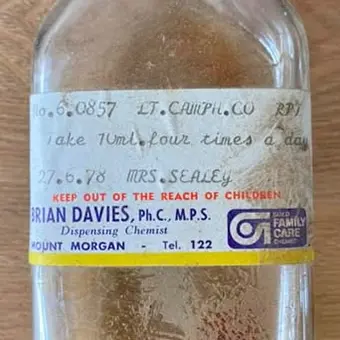
Prior to 1970, the burden of protecting children from unintended consumption of potentially harmful products such as prescription medications, cleaning products, and pesticides rested primarily on the shoulders of consumers. Packaging for these types of products were frequently labelled with “Keep Out of Reach of Children,” and the responsibility for manufacturers more or less ended there.
But the post-World War II era saw an alarming rise in accidental poisoning of minors due to an increasing abundance of household chemicals and prescription drugs in the home. Curious children who were able to locate such items encountered virtually no resistance in opening them and sampling contents, resulting in accidental poisoning becoming one of the leading causes of injury-related deaths among children under five years of age. This prompted calls for federal legislation to require that safeguards be implemented.
The watershed moment came when the United States enacted the Poison Prevention Packaging Act (PPPA) in 1970. Unlike previous regulations that relied primarily on warning labels, the PPPA required certain hazardous products to be sold in "special packaging" that is significantly difficult for children younger than five years old to open within a reasonable time, yet not difficult for normal adults to use properly.
The law eventually covered numerous categories including:
Responsibility for administering the law ultimately fell to the U.S. Consumer Product Safety Commission (CPSC), while pesticides became regulated by the Environmental Protection Agency.
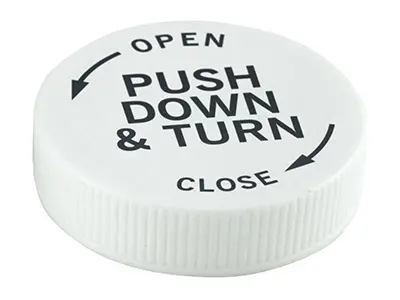
The earliest commercially successful CR designs were almost entirely rigid containers featuring mechanical safety closures. Common designs included push-and-turn or squeeze-and-turn caps, align-arrow caps, snap-lock closures, and other types requiring two independent actions to be applied at the same time. These designs exploited the fact that young children generally struggle to coordinate two unrelated motions simultaneously, while adults can learn the required sequence quickly. These closure systems rapidly became standard throughout the pharmaceutical industry.
These rigid containers with security caps are still widely used today, appearing in pharmacies and on market shelves everywhere. But pharmaceutical and other industries are actively shifting to increased use of flexible pouches and sachets. The benefits in source reduction, space-saving, and reduced shipping costs, combined with innovative safety designs, are making child-resistant flexible packaging a preferred choice.
For nearly three decades after the PPPA, child-resistant packaging was dominated by rigid bottles. At that time, significant engineering challenges prevented flexible packaging from being a viable alternative to rigid containers. Films could be easily torn or punctured, seals could often be peeled apart, and reliable child-resistant closure mechanisms had yet to be developed.
The first flexible CR packages generally consisted of heavy-gauge laminated films, reinforced tear paths, hidden opening features, and peel-and-push blister cards. For years, zippers on flexible pouches were too easy to open, and therefore could not pass federal child-resistant testing protocols.
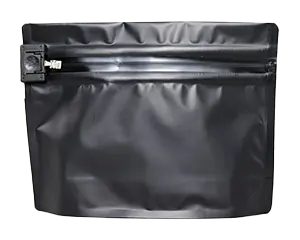
Then, in the 2000s and 2010s, devevlopment of flexible CR packaging expanded rapidly. Major drivers included legalization of cannabis products, single-dose pharmaceuticals, detergent pods, nicotine products, and concentrated chemicals. Manufacturers developed sophisticated resealable pouch systems incorporating features such as:
Many designs require two or more deliberate actions, such as locating a hidden tear point and simultaneously pulling in a prescribed direction, to satisfy child-resistance requirements while remaining practical for adults.
One of the most innovative aspects of child-resistant packaging was that regulations focused on performance rather than design, shifting the focus from the conceptual to the practical. Rather than prescribing specific closure geometries, regulators established human-factor testing protocols. This represented a major shift in packaging engineering. Instead of asking, "Does this cap look child-resistant?" manufacturers had to answer, "Can children actually open it?"
Unlike many packaging standards that rely primarily on laboratory equipment, child-resistant packaging is still validated using human subjects. Testing includes two independent populations: children and adults. Because a package that children cannot open - but adults also cannot open - is considered a failure.
Subjects ages 42–51 months, balanced by age and sex and representative of diverse backgrounds, receive the package without instructions. If unsuccessful after five minutes, they are shown a silent demonstration and given another five minutes.
To pass U.S. PPPA testing, at least 85% of children must fail to open the package during the first five minutes AND at least 80% must still fail after the demonstration.
Senior adults are also a vital part of testing because excessive security can reduce medication compliance. Typical testing involves adults between approximately 50 and 70 years of age.
Participants must understand the instructions, open the package, properly reclose it, and repeat the process within specified time limits.


After the passage of the PPPA, manufacturers needed standardized engineering methods to ensure consistent production of child-resistant components. In the mid-1970s, ASTM International (originally the American Society for Testing and Materials) quickly organized industry committees that developed voluntary standards covering:
Specifically, ASTM D3475 was developed to describe safety performance standards for child-resistant packaging, including flexible pouches.
In 1989, the International Organization for Standardization created ISO 8317, the international standard for child-resistant packaging. This guidance specifies performance requirements and testing procedures for reclosable child-resistant packages. Like the U.S. approach, ISO 8317 is performance-based and evaluates both child resistance and adult accessibility using standardized human testing.
Flexible packages undergo the same human panel testing as rigid containers. However, testing development is considerably more complex than simply creating a difficult-to-open closure. Engineers must also evaluate additional characteristics, including:
Today's child-resistant packaging development combines several complementary disciplines, such as mechanical design, polymer science, flexible materials engineering, statistical validation, and manufacturing process control. Most manufacturers perform extensive in-house development before formal certification, using iterative usability studies to refine designs. Official certification testing is then conducted by independent laboratories using the prescribed regulatory protocols. Standards such as ISO 8317 are intended primarily for type approval, not routine production quality control, meaning manufacturers must separately maintain manufacturing consistency through their own quality systems.